


You’ll Never Look at a Diary the Same Way Again After You See How This One’s Made


If you think a diary is just paper and a cover, our handmade paper diary is here to change your mind.
At Diaries of India (a Truly Tribal venture), every diary is a quiet revolution in your hand – eco-friendly paper, carefully crafted by women craftsmen from Rajasthan, and a symbol of sustainable change. This is not just Indian stationery; it’s a story you can write in, every single day.
In this first blog, let’s take you behind the scenes of:
What a handmade paper diary really is
How handmade paper is made – step by step
The women craftsmen of Rajasthan who bring these diaries to life
How this work creates jobs and genuine empowerment
What Is a Hand-Made Hand Paper Diary?
A handmade paper diary is a diary where almost everything is done by human hands:
The paper is handmade, sheet by sheet
The binding, folding, and finishing are done manually
Each diary is unique – in texture, feel, and character
Unlike mass-produced factory notebooks, a handmade paper diary typically uses:
Cotton rag and textile waste instead of fresh wood pulp
Minimal chemicals and more traditional processes
Hand-bound spines and hand-finished covers
When you buy a handmade paper diary from India, you are choosing:
Eco-friendly stationery that reduces waste
A sustainable diary that supports local communities
A beautiful, textured writing experience that feels personal and warm
This is why so many people today search for “handmade diary online India” or “eco-friendly journals” – they want products that are thoughtful, responsible, and rooted in real stories.
How Is Handmade Paper Made? (A Detailed Step-by-Step Journey)
The heart of our sustainable diary is its handmade paper. Here’s a closer, more detailed look at how our partner units and women craftsmen create that paper.
1. Collecting and Sorting the Raw Material
The journey begins with cotton rags and fabric waste:
Offcuts from tailoring units
Discarded cotton fabrics
Clean, mostly natural-fiber textiles
These are sorted carefully by:
Color – to reduce excessive bleaching or dyeing
Quality – to ensure strength and smoothness in the final sheet
This means your eco-friendly diary is often made from material that might otherwise end up in landfills.
2. Cutting, Cleaning, and Turning It into Pulp
Next, the sorted fabric goes through three key stages:
Cutting
The fabric is cut into small pieces.
Smaller pieces help create smoother, more uniform pulp.
Washing
The pieces are thoroughly washed to remove dust and impurities.
Clean raw material is the foundation of clean, bright handmade paper.
Pulping
The washed pieces are mixed with water and beaten until they break down.
This creates a thick, slightly fibrous slurry called pulp.
At this stage, it’s hard to believe this wet, cloudy mixture will become the crisp pages of your handmade paper diary.
3. Adding Natural Additives and Colours
To make the paper more usable and beautiful, the craftsmen add:
Natural or mild sizing agents (like starch)
Natural or mild sizing agents
This helps the paper hold ink better and prevents too much bleeding.
Colours or dyes (if tinted sheets are needed)
Optional natural inclusions such as:
Flower petals
Grass fibers
Thread or jute fibers
Everything is stirred and mixed until the pulp has an even texture and tone. This is how you get those gorgeous, textured, speckled handmade sheets you often see in premium Indian eco-friendly stationery.
4. Sheet Formation with Mould and Deckle
This is where the craft becomes pure magic.
A large vat or tub is filled with water and diluted pulp.
A mould and deckle – a wooden frame with a fine mesh – is dipped into the vat.
The frame is gently shaken underwater:
This spreads the fibers evenly.
It helps align fibers, making the paper stronger.
When the frame is lifted out:
Water drains away through the mesh.
A thin, even layer of fibers remains on top – this is the birth of a handmade paper sheet.
Every single sheet in your handmade diary is formed like this, one at a time, by hand. The thickness depends on:
How long does the mould stay in the pulp
How much pulp settles on the mesh
The control and experience of the craftsman
5. Couching – Transferring the Wet Sheet
The next step is called couching (pronounced “cooching”).
The mould is flipped onto a layer of felt or cloth.
The wet sheet gently transfers from the mesh to the felt.
Another felt is placed on top, and the process is repeated.
This creates a tall stack of:
Wet handmade paper sheets
Each separated by layers of felt
It’s a delicate process – too fast, and the sheet tears; too slow, and it sticks.
6. Pressing the Sheets
The stack is then placed into a manual or hydraulic press.
The press squeezes out excess water.
The fibers get closer and more compact, strengthening each sheet.
This is a crucial part of handmade paper making because it affects:
The smoothness of the surface
The durability and feel of your diary pages
7. Drying in the Sun and Air
After pressing, the sheets are carefully separated and left to dry:
They may be hung on lines like clothes, laid flat, or placed on racks.
In Rajasthan’s strong sunlight, many sheets are naturally sun-dried, giving them a unique character.
Drying takes time and patience. Uneven or rushed drying can cause:
Wrinkles
Warping
Uneven thickness
So the craftsmen keep a close eye on this stage to make sure the paper is flat, smooth, and ready to become premium handmade diary paper.
8. Finishing, Smoothing, and Cutting
Once fully dry, the handmade paper sheets are:
Pressed again or passed through rollers for extra smoothness
Trimmed into consistent sizes
Sometimes printed, textured, or combined with other materials if they are to be used as covers
Only after this detailed process do the sheets move on to the diary-making stage: folding, stitching, binding, and finishing.
The Women Behind the Diary: Rajasthan’s Skilled Women Craftsmen
Behind every Diaries of India handmade diary is a dedicated group of women craftsmen from Rajasthan, working through self-help groups (SHGs).
They are not called artisans here – they prefer to be known as craftsmen, because:
They handle real tools, real processes, and real responsibility.
Their work is disciplined, precise, and repeatable.
They build a product from raw material to the final piece.
These women craftsmen are involved in:
Sorting and preparing the raw textile waste
Assisting in the pulping and sheet-forming process
Drying, stacking, and checking sheets
Folding paper for inner pages
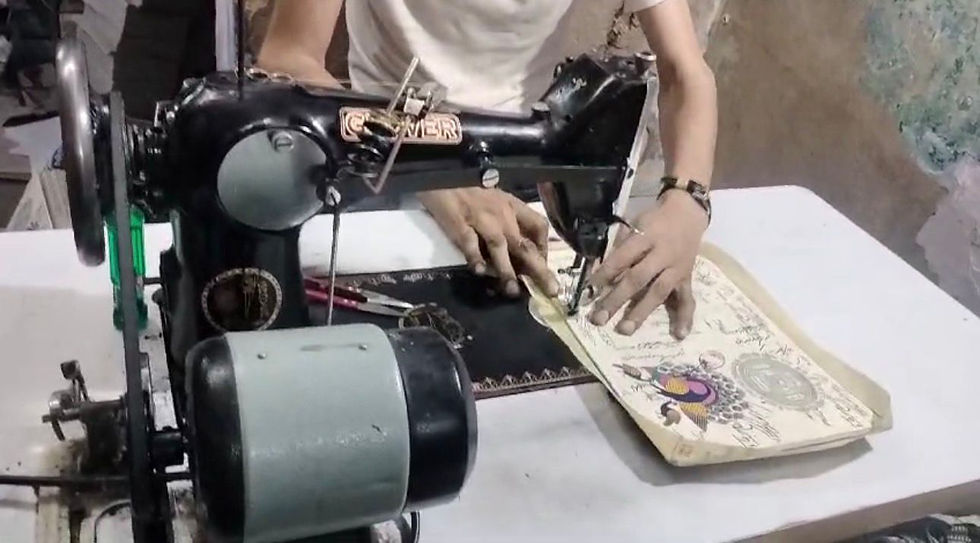
Stitching, binding, and assembling the diary
Final quality checks – making sure each diary looks and feels right
For many of them, this work is:
The first source of regular income they’ve ever had
A reason to step out of the house with pride
A way to get their children educated and their families more secure
When you see “Made by women’s self-help group in Rajasthan”, it’s not a label. It’s a network of real people who have put time, strength, and care into your diary.
How This Works Creates Jobs and Real Empowerment
Buying a handmade, eco-friendly diary is not just an aesthetic choice; it directly supports social change.
1. Income That Brings Confidence
Every order of handmade paper diaries creates:
Steady, dignified work for women craftsmen
Fair pay per piece or per day
A reliable income that can be planned around
That income means:
School fees can be paid on time
House expenses aren’t always a struggle
Women no longer have to ask for every rupee they spend
This financial independence translates into quiet but powerful confidence.
2. Local Jobs, Less Migration
Because this work can be organised near villages or small towns:
Women don’t need to relocate to big cities for low-paid factory work
Families stay together
Local youth can find related work in transport, supply, packing, and more
In a very practical way, a simple handmade diary from India becomes a tool for local employment and community stability.
3. Collective Strength Through Self-Help Groups
Working as a self-help group (SHG) gives these women:
Access to savings groups and micro-loans
Negotiating power for raw materials and pricing
Shared responsibility and mutual support
Within the group:
Some women manage basic accounts
Some coordinate with buyers and organisations like Truly Tribal
Others supervise quality, training, and production schedules
This builds leadership, decision-making, and problem-solving skills – essential parts of true empowerment.
4. Skill Building and Future Opportunities
Through continuous production of sustainable handmade diaries, the women craftsmen learn:
Technical skills: paper handling, folding, binding, finishing
Practical business skills: deadlines, costing basics, quality control
Adaptability: handling new designs, custom orders, or bulk requirements
These skills:
Give them the confidence to train other women
Open up opportunities in related crafts like cards, gift boxes, and stationery sets
Plant the seed for future possibilities – from master craftsmen to micro-entrepreneurs
5. Empowerment You Can Feel on Every Page
Empowerment here is not a slogan. It shows up when:
A woman signs her own bank form for the first time
A mother proudly buys books for her child with money she earned
A group of women craftsmen confidently negotiate for better rates
Every time you write in a Diaries of India handmade paper diary, you are literally supporting:
Eco-friendly stationery
Employment for women craftsmen in Rajasthan
A more sustainable, conscious lifestyle
Write Your Story in a Diary That Already Has One
Your diary doesn’t have to be just another office supply.
It can be:
A handmade paper diary created from recycled cotton
A product of patient, skilled work by Rajasthan’s women craftsmen
A small, everyday way to support sustainable, ethical, Indian-made stationery
At Diaries of India (a Truly Tribal venture), we believe that every page you write on should feel good – not only to your hand, but also to your heart and conscience.
So the next time you think of buying a diary, choose one that carries:
A cleaner footprint
A real human story
And the quiet strength of women who crafted it.

Comments